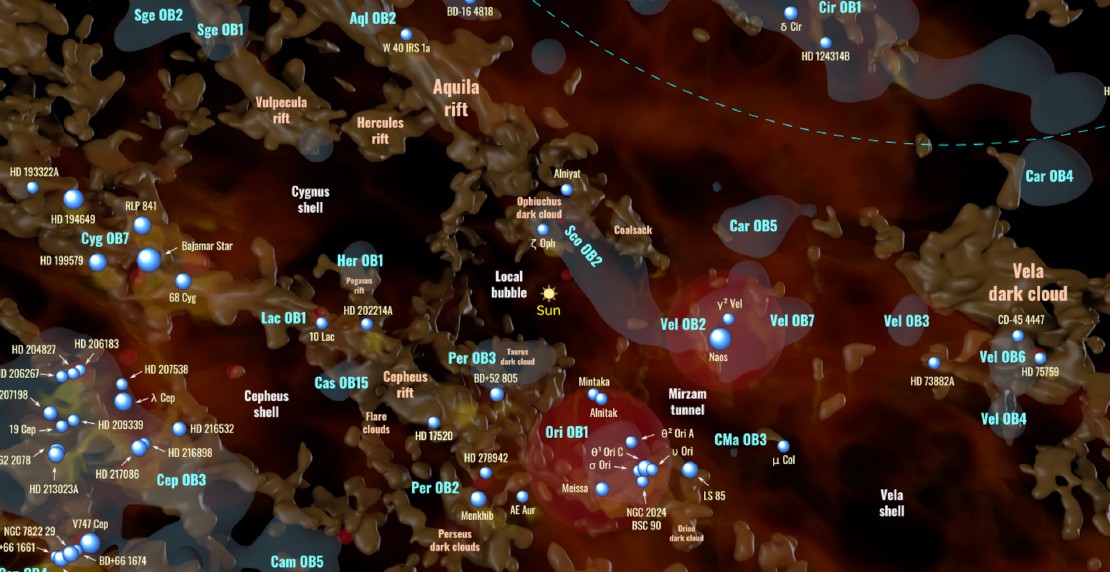
An improved hot star map
The European Space Agency’s Gaia Mission has revolutionized astronomy in many ways. As just one example, the Gaia Mission has provided the first accurate survey of stars in the galactic plane out to about 5 kpc.
As the Gaia Unlimited project has shown, the completeness of this data set depends upon star type, distance, dust extinction and other parameters. For the bright, hot and massive OB stars often used to map galactic structure, the survey is probably reasonably complete out to 2-3 kiloparsecs in most directions.
Hot star maps
I have used Gaia data to produce numerous hot star density maps, including a detailed one using Gaia DR3 and showing all known O-type stars out to 1.25 kiloparsecs based partly on the O-type star list provided by McCallum 2025 but with Bailer-Jones distances.
I named many of the hot star density regions after known associations of OB stars, but many had no related association and so no name.
Quintana OB star and association papers
Recently, Alexis Quintana and colleagues have published a list of OB stars out to 1 kpc and followed up with a second paper with a new list of OB associations also out to 1 kpc. The new OB association list provides a number of new potential names for hot star density concentrations. However, a number of names used in this new list are incompatible with the IAU naming scheme for OB associations.
IAU nomenclature for OB associations
The IAU naming scheme for OB associations was adopted on 26 August 1964 as described here . This simple elegant naming scheme has the form
XXX OB N
where XXX is the standard three letter abbreviation for a constellation and N is an integer.
The IAU naming scheme was widely adopted following its publication (except that some astronomers continued to use the older name Sco-Cen instead of the IAU name Sco OB2 for this association).
Two advantages of the IAU scheme are that, first, it contains the letters “OB” and so the name unambiguously refers to an OB association instead of a star cluster, HII region, molecular cloud or other galactic structure; and second, the names are relatively short, a crucial property for using them on galactic maps.
New names for hot star associations
The new Quintana OB association list adopts a number of names that violate the IAU nomenclature. Sometimes this is just because of an odd inconsistency - for example OB associations in Vela are given without the three letter abbreviation, so “Vela OB2” instead of Vel OB2. In other cases OB associations are named after star clusters (Alessi 20 or Tr. 10) or borrowed from names invented by other researchers that also did not follow the IAU nomenclature (Cep-Her 1 and Cep-Her 2).
As a cartographer, I think that names and naming standards are important and I regret some of the naming choices made in the current Quintana paper.
For my own new map, I have adjusted the names to meet the IAU convention, as described below. I am open to changing these names so long as they follow the IAU format.
Alessi 20
This star cluster is in Cassiopeia so I used Cas OB15 for this OB association. So far as I know this id is not yet in use (it does not appear in SIMBAD).
Tr. 10
This OB association is split into three widely separated subassociations, only one of which, Tr. 10c, is actually related to the Trumpler 10 cluster.
On my map I have renamed Tr. 10c to Vel OB7 and renamed Tr. 10a and Tr. 10b to Car OB5.
Cep-Her 1 and Cep-Her 2
These associations appear to surround the Roslund 6 cluster (which is actually in Cygnus). I’d be happy to adopt a name for this prominent hot star concentration just outside the Local Bubble. For now I’ve called this region Her OB1 but I am very uncertain about this designation.
Beyond 1 kpc
Since my O-type star map goes out to 1.25 kpc, it has more OB associations than those that appear on the Quintana map. I kept the well established Sgr OB1 and Cam OB1. I had no name for what appears to be an OB association ionizing the Sh 2-310 HII region and containing the star cluster NGC 2362. For now I have labelled it CMa OB5.
Missing hot star concentrations
Both the Messier 6 and Theia 38 clusters have prominent hot star halos in the Gaia DR3 data. They do not appear in the Quintana list, perhaps because they are too small.
Extra OB associations
The Quintana list contains a number of OB associations that do not appear as hot star concentrations on my maps, perhaps because they are too dispersed. These include Ori OB3, Cyg OB10, Tau OB2, Sco OB5 and more. I left most of these off my O-type star map.
Other issues
Quintana uses the designation “Cam OB1” but I am already using that name for an association beyond 1 kpc (based on several published papers). For now I have renamed the new Quintana association to “Cam OB5”.
Quintana uses the designation “Cir OB2” but I am already using the name “Cir OB1” for this association. There are two HII regions in this direction, both likely ionized by OB associations. One is located at less than 1 kpc and the other is located at about 3 kpc (and associated with the Pismis 20 star cluster). My proposal is to name the closer one Cir OB1 and the further one Cir OB2.
Revised O-type star map
Download links for the latest O-type star map with the revised hot star concentration labels:
PNG: Download here
PDF: Download here
Related Posts
Acrux board game
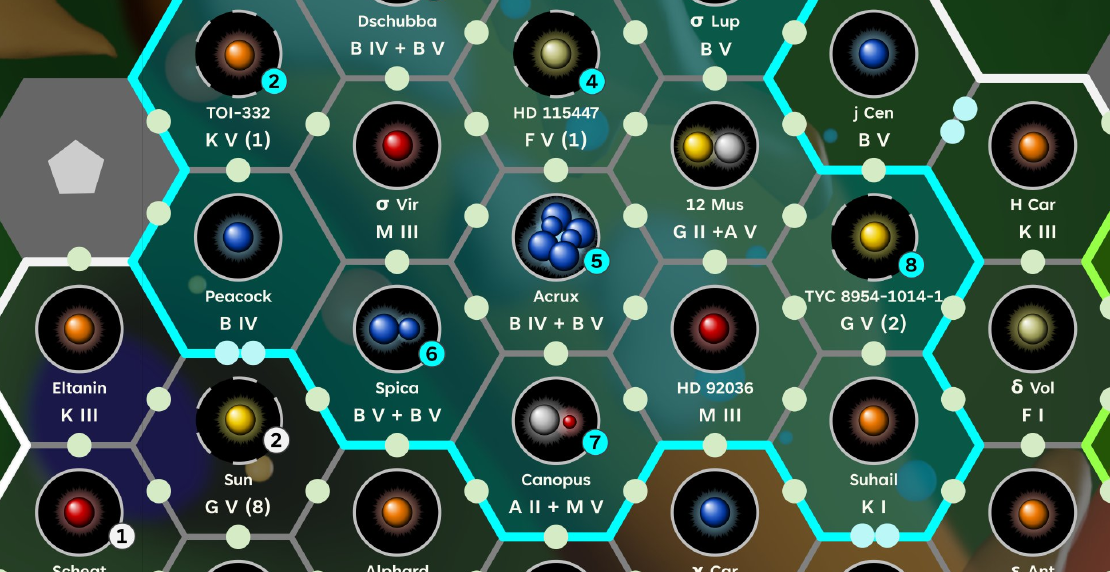
There are about 3-5 thousand new board games published every year. A board game designer would need to have a very special game to rise above the crowd.
Read more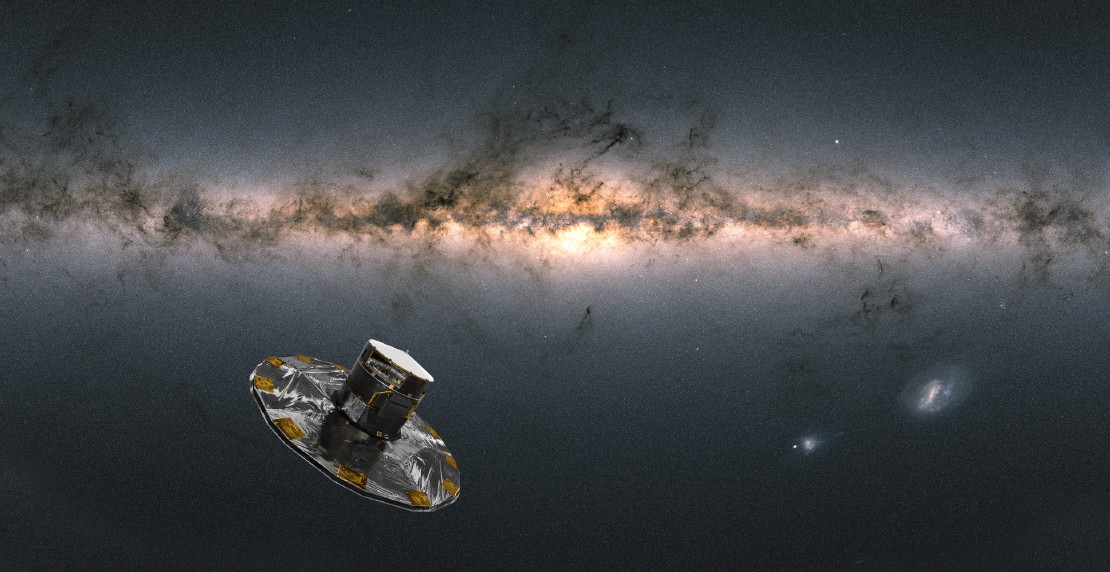
Counting down to Gaia DR4
The European Space Agency’s Gaia Mission is the first astronomical mission to create a detailed survey of the Milky Way galaxy far beyond the immediate boundaries of the Local Bubble. The fourth data release, expected in December 2026, is generating much excitement.
Read more
Exploring the Milky Way in VR
Today I’m announcing two experiences in Horizon Worlds that let you explore our home galaxy, the Milky Way. on the web, mobile phones or in virtual reality.
Read more